I used to be a word, now I’m an image
She used to be a photographer, even though she never called herself
one and has spent a correspondingly long time ‘looking’, ‘framing’,
‘observing’ and ultimately ‘seeing’. At least that’s what she thought
this process culminates in. Back at that time, she chose that one
medium. After all, it seemed the perfect balance between participating
and taking distance and perhaps, because it was not too self-exposing.
‘Making images of’ authorised for the quiet observation that lets her
drift into the point from which she looks. It allows her to relate to
what’s around and renegotiate it through image-making in a way she
perceives it or wants others to see. According to a theory, it takes
21 days to transform something into a habit, for the new behaviour to
become automatic. It was only later on when she noticed that this
photographic mode of being slipped into her daily grind, free from the
focus which the lens delivers.
Having spent some years ‘behind the camera’, it was hard not to let
that knowledge, or one must say–sensibility, be present in her way of
looking back at image-objects she later on created.
***
Aldous Huxley has famously said that the more you know, the more you
see. Is it then true that the more you look, the more you will get to
know about your object of your interest? Is there such a thing as
knowledge that is intrinsic or together with meaning, it is something
people grant to those same things by opening their potential to be
read?
‘Flat Bubbles’ is an image-object, space as a landscape, a possibly
infinite ocean, flattened interior of a crystal ball, unwrapped
underbelly of a forest, interior of a cell. It is an image composed of
many images. If we had asked Henrik Ibsen, a Norwegian playwright and
theatre director, he would have said that this image is worth 664 000
words. After he died at the beginning of the 20th century, his quote
“A thousand words leave not the same deep impression as does a single
deed” has been appropriated and paraphrased many times into what we
know today. Thinkers, philosophers, advertising agents, artists, they
all tried to pinpoint the compelling function of an image to convey
meaning beyond language.
The word ekphrasis in Greek means a description of a work of art as a rhetoric exercise. It is often a vivid description of visual work, real or imagined, spanning its usage in music, literature and art criticism. It might also describe processes such as dreams, thoughts and whimsies of the imagination. It can constitute a work which is depicting or describing another one, an imaginative and non-existent, factual or real. Today, perhaps, we can add to the list a simulated one.
Through the imaginative act of narrating and reflecting on the
image-object, the viewer is the narrator of the story he sees,
simplifying or expanding its meaning. People silently agree that words
have fixed meaning and that we refer to the same thing when
communicating. But words are always diffracted in the context in which
they exist and reflected by individuals’ subjectivity and situated
knowledge.
Text-to-Image Synthesis, also called Conditional Image Generation, is
a process that consists in generating a photo-realistic image given a
textual description. It uses neural network architectures to generate
images based on the description. Different from ekphrasis, for it to
do its job, one should describe the object which is to be visualized
and referred back to the data set in only one particular way. No
metaphors, no symbolic meanings can create the objective image.
Artworks are never the words that are directly used to describe them,
but also precisely what they are. As an interface, they are coded,
power image-objects.
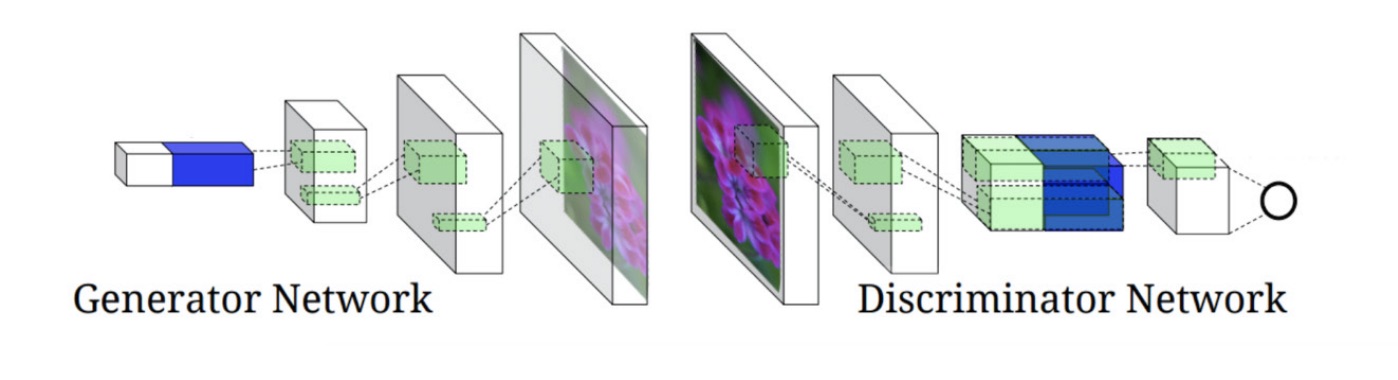
Generative Adversarial Network, Цcredit: Scott Reed
Yet, the algorithm reaches out to those same databases when confronted with the task to translate and enact words and to perform as an image of the conceptual, metaphorical, symbolic, speculative and non-existent. The image is a derivative of its idea and possible form.
the hand
the alien
the sun
the crack
the lightning
the bubble
the figures
the car
the gas station
the esquimo
the sea
the farm animal
the watching tower
the window
the cloud
the plant
the rock
the boat
the staircase
are actors, characters and agents in the flat ontology to avoid the centralisation of power and the dominance of one form of life over another. They are the vocabulary which builds its own syntaxis. Reading the image, it is simply its navigation.
intimacy through proximity
converging and diverging
thank you zoom
the closer you are getting to the subject, the closer you are to its
problems
different levels of visibility, transparency, abstraction
sequential, yet transparent
thank you machine
Narratives are created by those who can imagine, history-by those who can write. Language is one of the structural protocols of communicating and mediating meaning. For some, there is nothing outside of the text. Words can, but do not, flawlessly represent the world. They open up somewhat camouflaged possibilities of readings, hence possibilities of visual storytelling, as a derivative. This translation, through interpretation, mimics the evolutionary process of nature as a generative model.
“Give orange me give eat orange me eat orange give me eat orange give me you.”
The 16-word long quote is by Nim Chimpsky, a chimpanzee and the subject of an extensive study of animal language acquisition at Columbia University. Nim was raised by human surrogate parents, as part of a survey intended to challenge Noam Chomsky’s thesis that only humans have language. It was later concluded that Nim mimicked symbols to get a reward but did not understand the language, nor he could create sentences and use random patterns. Herbert Terrace, a professor in behaviourism, who was leading the project argued that none of the chimps, which have been part of similar experiments, were using language, because they could learn signs, but could not form them syntactically as language. Some evolutionary psychologists, in effect agreeing with Chomsky, argue that the apparent impossibility of teaching language to animals is indicative that the ability to use language is innately human development. Yet, teaching language to algorithms seems to make its way. Reading images appears to be a form of that open-ended intersubjectivity.
‘Flat Bubbles’ is an image which original form, the thought and consequently the text is no longer accessible. Its provenance, and so to say, its value is now the circulation of information around and within it. In Walter Benjamin’s terms reproducing a work is undermining its aura, its origin and its quality of being a unique piece of private property. Technologies which are everywhere around us now, are allowing me to mediate this piece of information. A chatbot, acting as the embodiment of the image itself and is mimicking the anthropomorphic tendency humans have towards machines and/or other non–humans. The dialogical relation between viewer, or otherwise, user, is drawing a trajectory for the generative and hence reproducible potential of the digital image/ map/ world. This further translation is no longer the original idea, but it is what constitutes its provenance. In the words of McKenzie Wark “The copy not only precedes but authenticates the original.” A work that cannot be experienced directly, in reality, is verified by the circulation of its images.
***
She still sees through images, feels in photographs. Once she imagined a thought, then translated it to words: “With words, their possible translation – the images, is the revolution of their meaning. Images are no longer things that can be only seen, registered and only produced by a human.” The latter is not a conclusion, because this is not the end. The dematerialised evolutionary stage of the work is produced by dematerialised labour delegated to the algorithm. Its output is brought together in a map, with no borders, neither quite complete. But it is an attempt to study the potential of an idea through its form, a possibility. The universe is vast, but there are maps of the universe too.
June, 2020